
 السعودية
 عُمان
عُمان Русский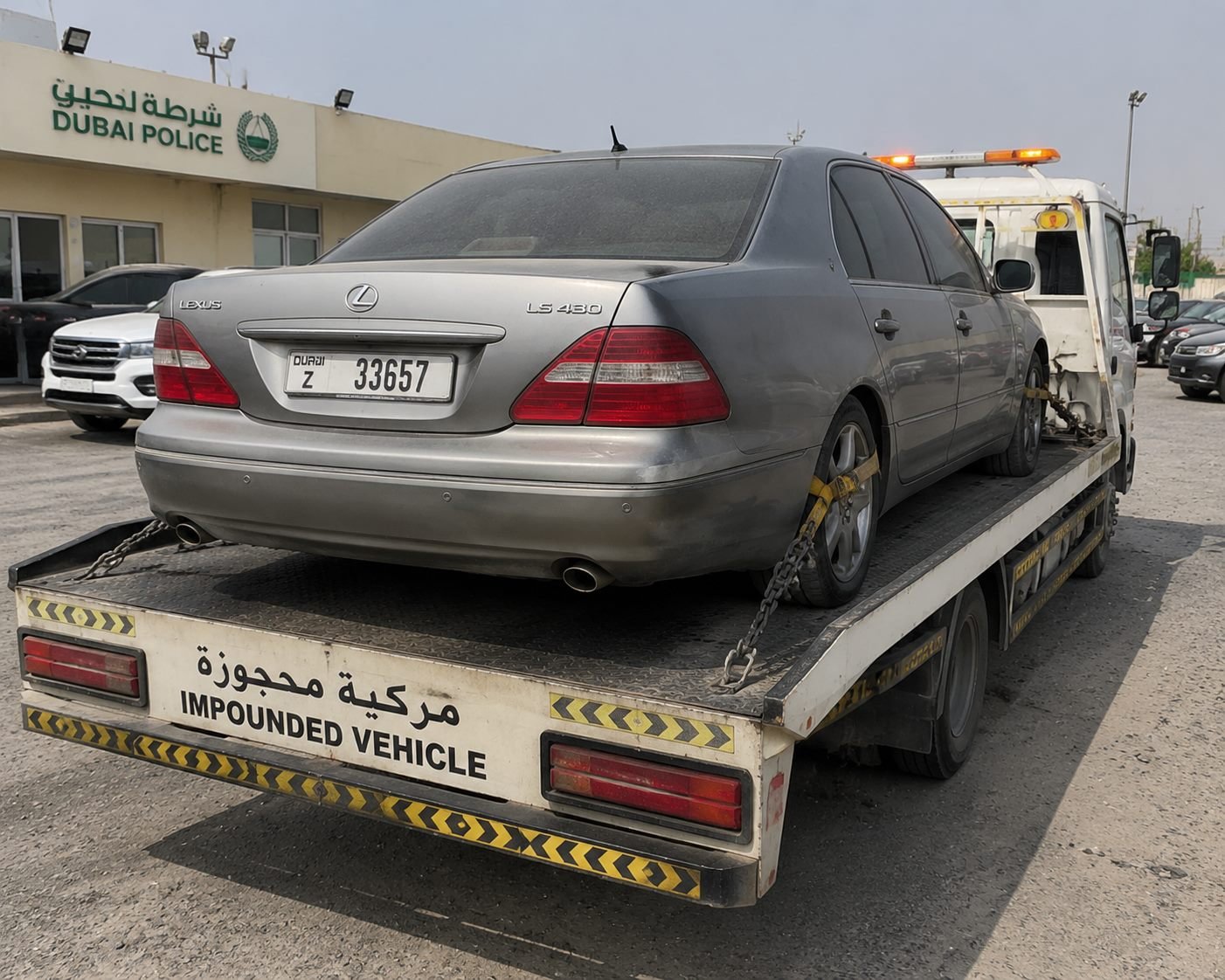
A car impounded in the UAE stays in the impound yard until the owner resolves the reason for impoundment, pays any outstanding fines, and settles the release fee plus the daily storage charges that keep building up for as long as the vehicle remains there. Depending on the reason — a serious traffic offence, expired registration, unpaid fines above a threshold, an accident investigation, or an abandoned vehicle — the impoundment period can range from a few days to several months. Because storage fees accumulate daily, every day spent deciding adds real cost, and for an older or already-damaged car, that daily charge can quickly overtake what the vehicle is actually worth.
This guide explains why cars get impounded in the UAE, what the general release process involves, and how to work out when letting the vehicle go and selling it for scrap value makes more financial sense than paying to release it.
Compare the total cost against the car's value first. Add the release fee, any outstanding fines and the accumulated daily storage charges together, then compare that total against what the car is actually worth — for an older or already-damaged vehicle, release often costs more than the car is worth.
Common Reasons Cars Get Impounded in the UAE
- Serious traffic offences. Reckless driving, racing, or accumulating a high number of black points can result in impoundment periods ranging from days to months.
- Expired or invalid registration. Driving with lapsed registration is a common and straightforward cause of impoundment.
- Unpaid fines above a threshold. Authorities in some emirates can impound a vehicle once outstanding fines pass a certain limit.
- Accident investigation. Police may hold a vehicle involved in a serious accident until their investigation is complete.
- Abandoned or unattended vehicles. Cars left in public areas for extended periods without movement can be impounded by municipal authorities.
The General Release Process
- Confirm the impound reason and release date (if a fixed period applies) with the relevant traffic authority or police department.
- Settle any outstanding traffic fines linked to the vehicle or owner.
- Pay the impound release fee and any accumulated daily storage charges.
- Present your Emirates ID, the vehicle's registration card (Mulkiya) and valid insurance.
- Arrange collection of the vehicle from the impound yard, either yourself or through an authorised representative.
Daily storage charges keep accumulating for as long as the vehicle remains in the yard, so delaying a decision has a real, growing cost — it's worth deciding quickly whether release is still worthwhile.
Release or Let It Go? The Factors That Actually Matter
The Remaining Value of an Impounded Car
Impoundment itself doesn't damage a vehicle — the car's condition is whatever it was when it went in. That means a car sitting in an impound yard can still hold real scrap or salvage value based on its metal weight and the condition of its parts, even if paying to release it no longer makes financial sense. For the full breakdown of how this valuation works, see our guide on how scrap car valuation works in the UAE.
Mistakes to Avoid
- Leaving a decision too long while storage fees keep accumulating.
- Assuming release is automatically worth it without adding up fines, fees and storage charges first.
- Not confirming exact release requirements with the relevant authority before attempting to collect the vehicle.
- Forgetting that expired registration may need to be renewed on top of the release fee.
- Letting a low-value vehicle rack up storage fees indefinitely instead of arranging removal.
How We Help With Impounded Vehicles
If releasing your impounded car no longer makes financial sense once fines, fees and storage charges are added up, we assess it based on its actual remaining value and, where possible, coordinate removal directly from the impound yard, with same-day payment once the deal is agreed.
Weighing up whether to release an impounded car?
Send us the release fees, fines and storage charges, and we'll give you a straight comparison so you can decide with real numbers, not guesswork.
+971 55 587 7803Frequently Asked Questions
Common reasons include serious traffic offences such as reckless driving or racing, driving without valid registration or insurance, unpaid fines above a certain threshold, and accidents where police hold the vehicle for investigation.
Release costs typically include a release fee, any outstanding traffic fines, and accumulated daily storage or towing charges, which can add up quickly the longer the vehicle stays impounded. Exact fees vary by emirate and impound reason.
Yes. Most UAE impound yards charge a daily storage fee that accumulates for as long as the vehicle remains there, which is why costs can escalate significantly if release is delayed.
Typically the vehicle owner's Emirates ID, the car's registration card (Mulkiya), valid insurance, and proof that any outstanding fines or the release fee have been paid. Requirements can vary by emirate and impound reason.
Not always. If accumulated fines, storage fees and the release cost together approach or exceed the car's market value, it is often more sensible to have it removed and sold for scrap instead of paying to release it.
In many cases a third party can handle the release with a signed authorisation letter and the required documents, though requirements vary by emirate and the reason for impoundment, so it should be confirmed with the relevant authority first.
Yes. We help vehicle owners across the UAE who decide not to release an impounded car, buying it based on its scrap value and coordinating removal directly from the impound yard where possible, with same-day payment.